Insights
Innovation Clusters: The role CRE plays in the creation and development of R&D ecosystems
December 3, 2025
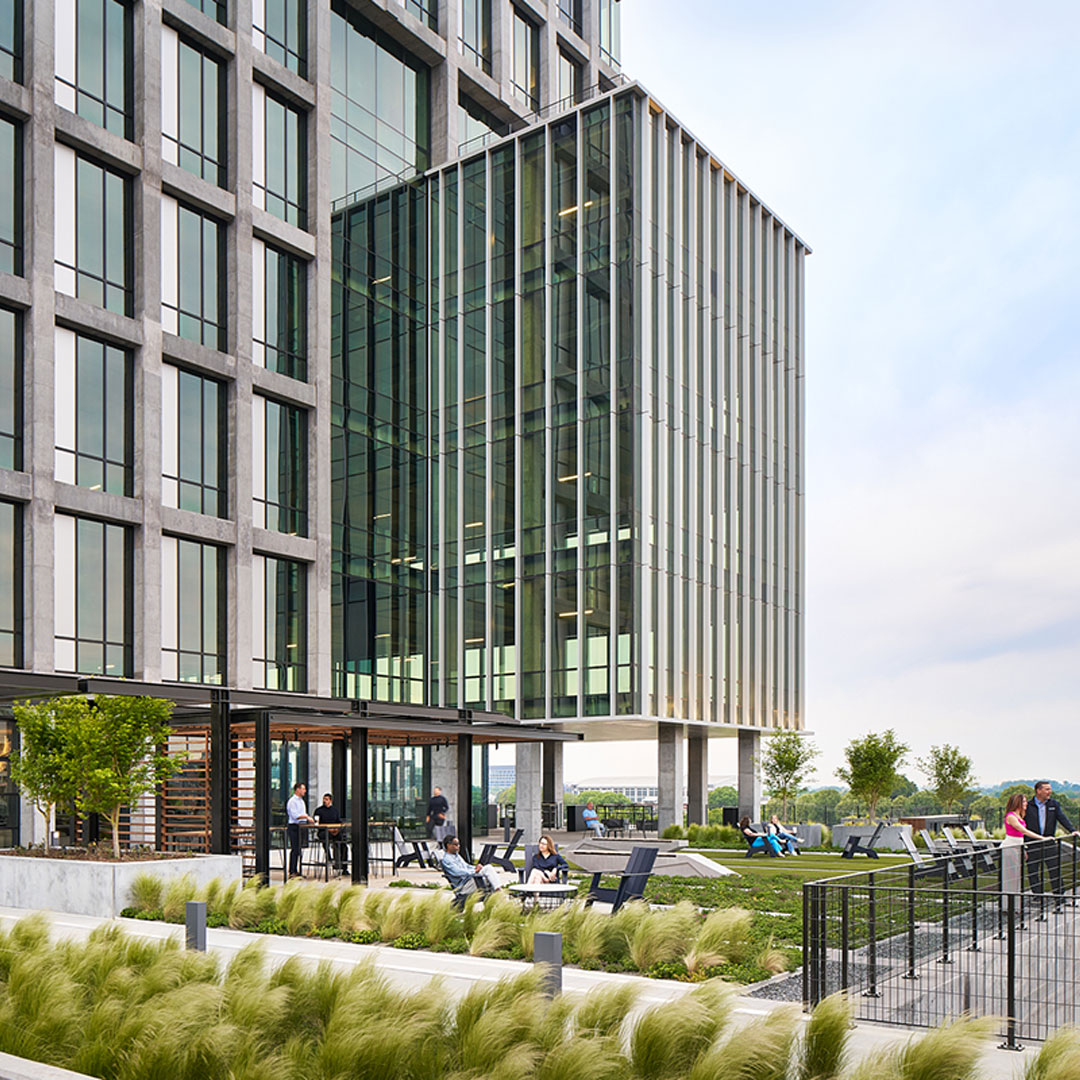
Overview
From labs to innovation hubs, Commercial Real Estate (CRE) fuels the engine of progress. It plays a critical, yet often underestimated, role in fostering and evolving research and development (R&D) networks. The evolution of traditional office space has dramatically transformed in recent years, driven by factors like the pandemic, technological advancements, and shifting innovation models. Today, CRE is not just providing space; it’s actively facilitating innovation.
Innovation has always been at the heart of U.S. economic growth—from information technology to artificial intelligence and healthcare to quantum physics. The tremendous level of innovation that powers the U.S.’s $30 trillion GDP requires an entire R&D landscape. Universities educate future talent and produce research; venture capital firms and other entrepreneurial sponsors support promising start-ups; and established companies across science, technology and healthcare nurture talent and invest in continued innovation.
These ecosystems require a physical foundation, and that’s where CRE comes in. Seasoned commercial real estate developers believe that the physical spaces where research, prototyping and collaboration occur directly impact the speed and effectiveness of turning ideas into real-world products and solutions. Across the U.S., Boston, San Francisco, Silicon Valley and San Diego are well-known innovation clusters because they share some key characteristics:
- World-class Infrastructure: Privately capitalized developments designed around scientific research.
- Proximity to Talent and Venture Capital Funding: Locations near universities and research institutions to supply the talent pool and drive research as well as access to venture capital funding
- 24/7 Environments: Work/live/play environments designed to attract and retain a long-term workforce.
Purpose-built innovation spaces
The actual building where R&D occurs is a critical component of an emerging innovation cluster. CRE developers must offer modern, purpose-built spaces with high-quality finishes and amenities, on par with Class A office buildings. These spaces could include features such as a full-service gym, substantial training and event space, abundant outdoor space, and collaborative lounges.
Critically, this R&D infrastructure is developed from the inside out and tailored to the specific needs of users. In these emerging markets, innovation is occurring across science, technology and healthcare. In these sectors, companies have different requirements. For example, a quantum company will have different lab requirements than a battery or biotech company. While sophisticated lab space is essential across these research disciplines, the design and utilization of that space and its process flow will vary greatly. For this reason, developers need to build flexibility, adaptability, and expansion opportunities into the base building to accommodate a wide range of science.
Within these innovation hubs, not all R&D spaces are big labs associated with a university or a large company. For innovation to thrive in an emerging cluster, there needs to be spaces to support start-ups and early-stage companies. For example, graduation suites are pre-built, fully turn-key labs that are tailored to the needs of a particular market and tenant. These 3,000 – 15,000 square feet (SF) spaces typically have shorter and more flexible lease terms. Given that it can take 10 -18 months to design and build full lab space, these pre-built graduation suites can be highly attractive to smaller occupants that need space immediately. Venture capital (VC) firms will often ask about a company’s ability to grow, and these smaller suites allow start-ups, often a series A or B company, to scale from the incubation stage and stay within the ecosystem. Innovation clusters must support these early-stage start-ups and growing companies for continued growth and vibrancy.
Building out the ecosystem
The oldest and largest innovation hubs, including Boston/Cambridge and South San Francisco, are anchored by major universities like Harvard, MIT, and Stanford. Universities are a key part of the innovation ecosystem, educating future talent and sponsoring a wide range of R&D activity. Both start-up and established companies are often located near universities, further strengthening and growing these hubs. These dynamics have several important implications for real estate development in innovation clusters.
First, these ecosystems support a few types of development models. Partnering with a university can be a successful way to develop innovation clusters. A university may be motivated to engage in a public-private project to help build out a particular area of research strength and drive commercialization of that research to benefit the university and the entire community. In this model, the project can be heavily influenced by the university, including a desire to have the location within walking distance from campus. Additionally, emerging hubs need third-party developments to support commercialization and innovation adjacent to but not on campus.
Second, the most successful innovation clusters are also 24/7 environments that are more than just modern workspace. These ecosystems need to be premier work/live/play environments with sufficient retail and housing that support a skilled workforce. From a multifamily perspective, these innovation clusters require Class A, high-quality apartment buildings to attract and retain talent that will be working in the adjacent R&D buildings. Developers with strong financial positions and diverse product type expertise will have an advantage in activating a dynamic innovation ecosystem.
Let’s examine two examples:
Case study: Chicago
Historically, Chicago didn’t have “catcher's mitt” for early-stage innovation, with no physical lab space outside of institutions, and was losing early-stage innovation. This has been changing over the last few years with the leadership of Portal Innovations, a local venture capital incubator.
Prior to 2020, the Chicago area had less than 1.2 million SF of non-owner occupied, Class B/C lab space mostly located in the northern suburbs. In the last couple of years, lab supply has doubled to nearly 2.5 million SF in the Chicago area with key developments by leading commercial real estate developers.
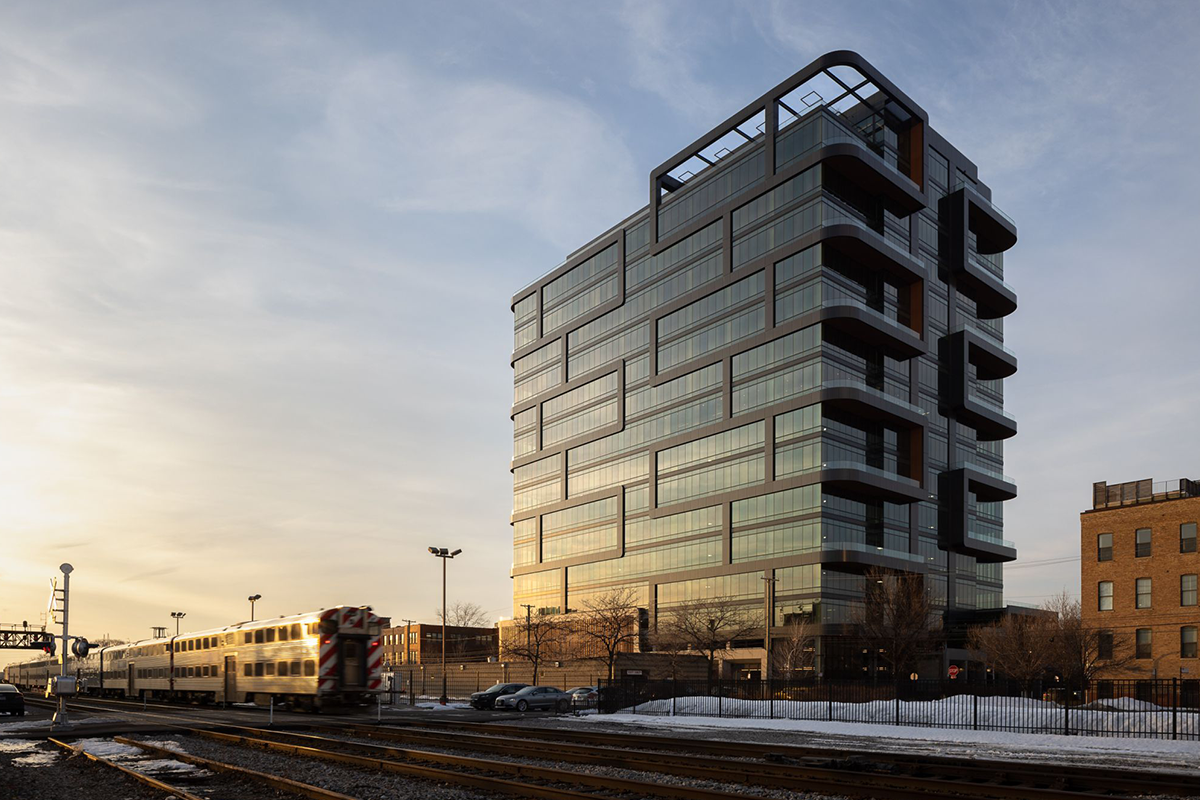
The Fulton Labs campus in Fulton Market is a good example of a 24/7 environment, developed speculatively before securing pre-leasing from a university. These facilities support companies specializing in a wide range of sciences including research related to AI, battery materials research, life sciences and medical devices. The campus is near Google and other tech companies. It includes a multifamily tower with over 360 units that was delivered in 2024 and is fully leased. The campus has a park at the center and is seen as a premier environment to work and live in Chicago and more broadly across the Midwest. Additional projects have also been built adjacent to universities, including the University of Chicago and Northwestern University which are both strong institutional drivers of research and talent.
These developments in Chicago are not only helping local talent grow but are also attracting established companies from other markets. Most recently, battery company Pure Lithium moved from Boston to Chicago due to the related research activity and talent pool in the area.
Case study: Atlanta
Georgia Tech has been a key partner in the Atlanta area and has a strong track record of creating innovation districts. The university, alongside Emory University, produces talent that attracts research partnerships and VCs needed to create the ecosystem. Tech Square, an incubator focused on technology in Midtown Atlanta, has transformed the midtown office submarket over the last 28 years and has been a major catalyst for growth.
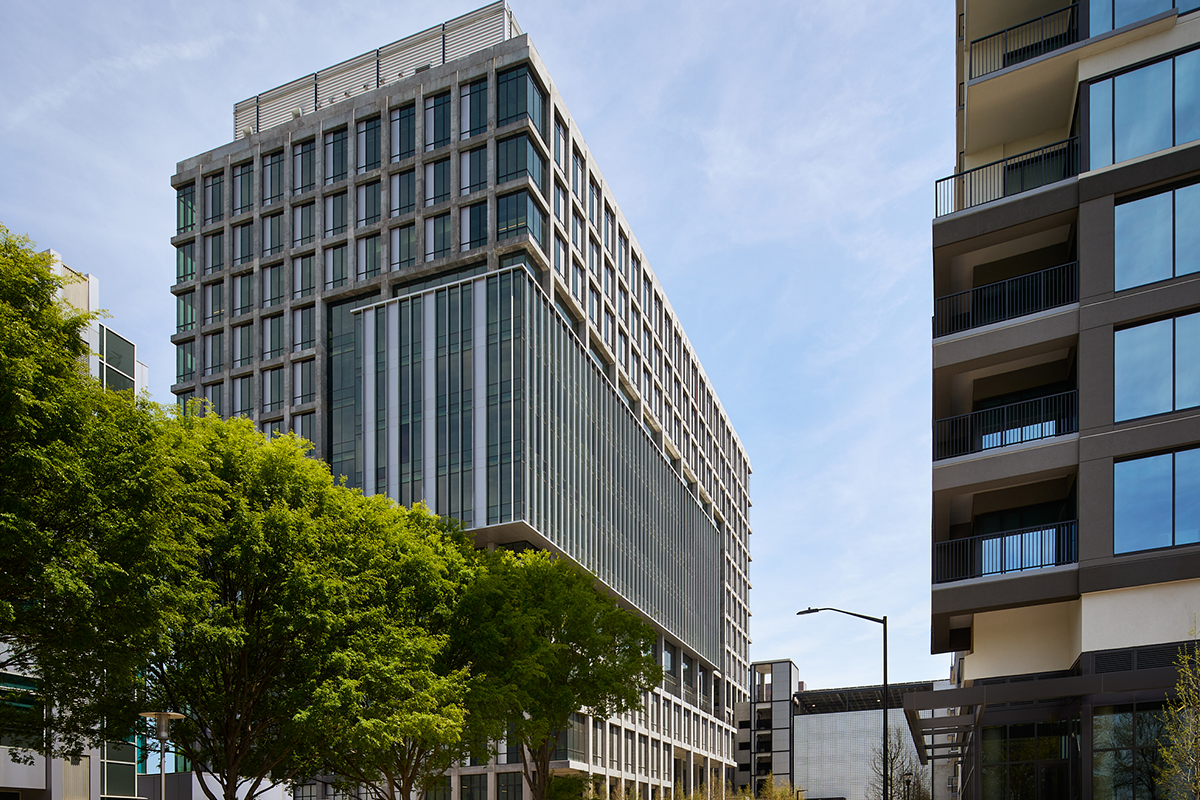
One of the most compelling examples is Science Square, a mixed-use development that began in 2020. Despite a slowdown in many areas of real estate development, it was clear that lab workers could not work from home, supporting demand for lab space. This speculative project had a capital partner and a ground lease from Georgia Tech but was developed without pre-leasing from university.
Science Square is located on the other side of campus from Tech Square, an urban area but with limited residential options. Therefore, along with Science Square Labs, Atlanta’s first dedicated Class A lab office building, The Grace Residences, a 14-story, 280-unit market-rate apartment high-rise was developed and completed in 2024. It is currently 93% leased and Science Square Labs is 87% leased.
In addition to the main lab, Portal Innovations operates an incubator in the building. The pre-built suites originally intended for spinoffs are now leased by established companies due to strong demand. Several Emory and Georgia Tech spin-offs have taken spaces at Portal Innovations along with 20 member companies.
As with the Chicago market, the ecosystem in Atlanta continues to attract established companies and institutions. Duracell has relocated its R&D operations and headquarters to Atlanta from Connecticut. The company was already recruiting from Georgia Tech and planning to move R&D closer to the talent. When management saw Class A lab office space, they realized that they could leverage their R&D space as a gathering spot for other corporate users. The concept of science on display is powerful and a valuable tool for attracting partners, customers, talent and investors.
Shriners Children’s Hospital had a similar experience. The institution does a significant amount of research but did not have a research institute. The Shriners research relationship with Georgia Tech was a key factor in its decision to locate in Atlanta. Modern, class A research space is extremely valuable for Shriners enabling the organization to ultimately better serve children and their families by having space dedicated to innovation.
Conclusion
Commercial real estate has evolved from a passive provider of space to a driver of innovation ecosystems. Our industry now goes beyond supplying space to fostering collaboration and facilitating R&D through design and flexibility. CRE is now influencing where and how innovation happens through placemaking and clustering, and community engagement.